Pistol
 CZ75-Auto
 Desert Eagle
 Dual Berettas
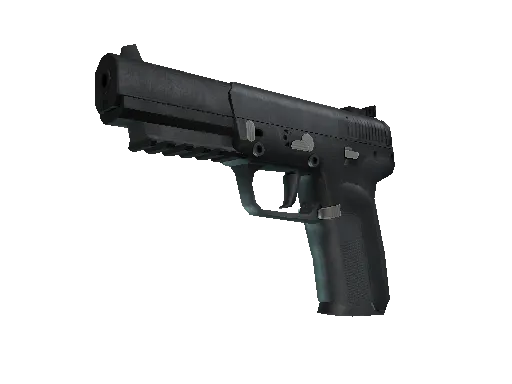 Five-SeveN
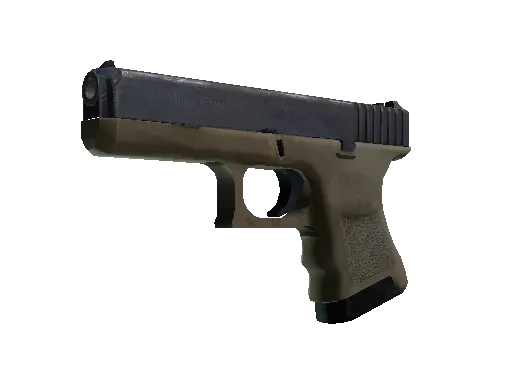 Glock-18
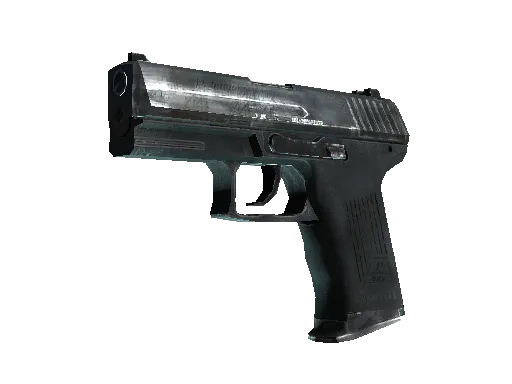 P2000
P2000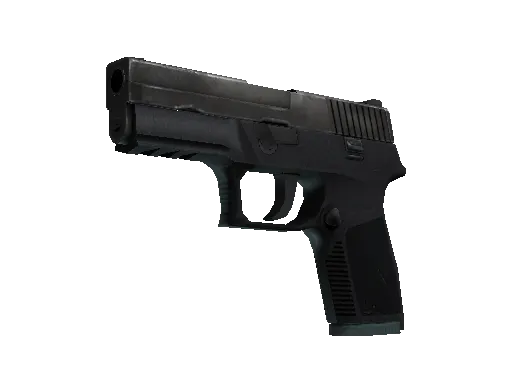 P250
P250 R8 Revolver
 Tec-9
Tec-9 USP-S
USP-S Zeus x27
Knife
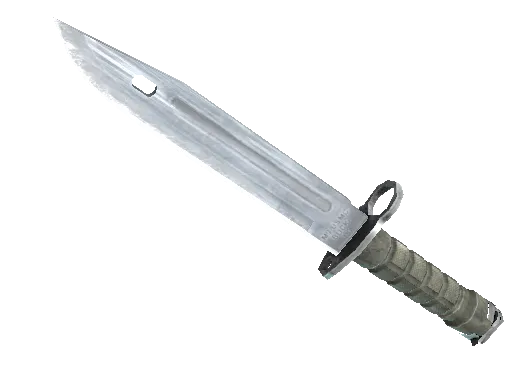 Bayonet
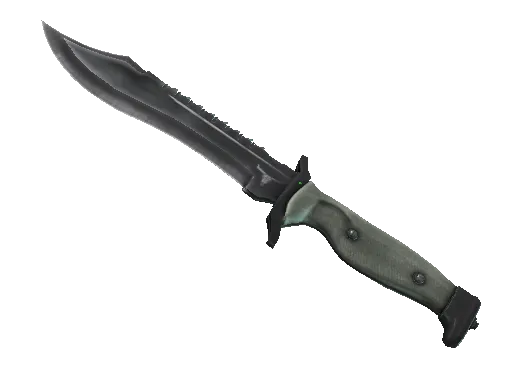 Bowie Knife
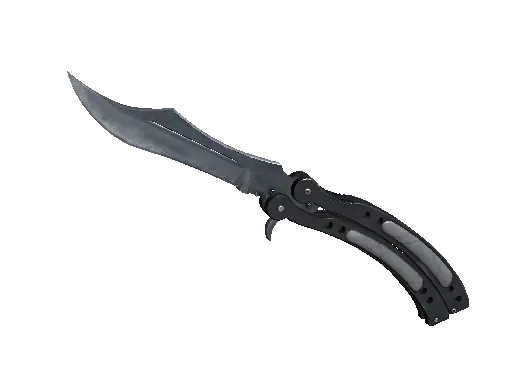 Butterfly Knife
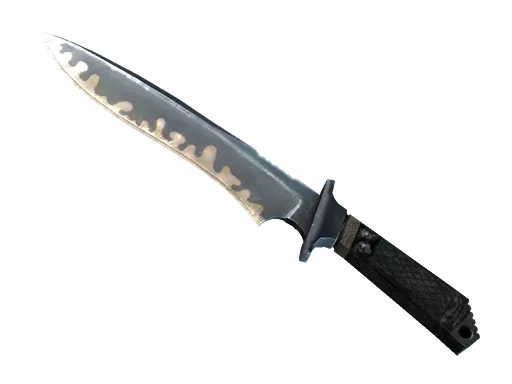 Classic Knife
 Falchion Knife
 Flip Knife
 Gut Knife
 Huntsman Knife
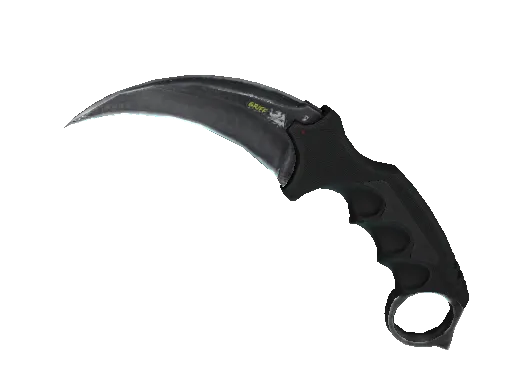 Karambit
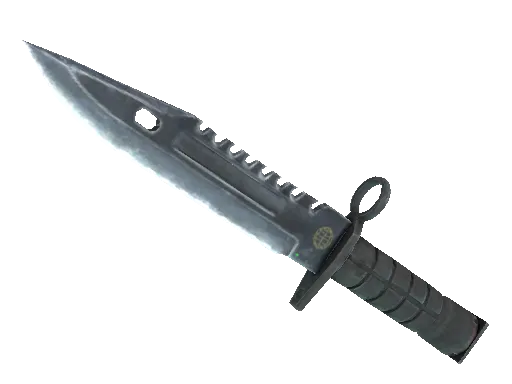 M9 Bayonet
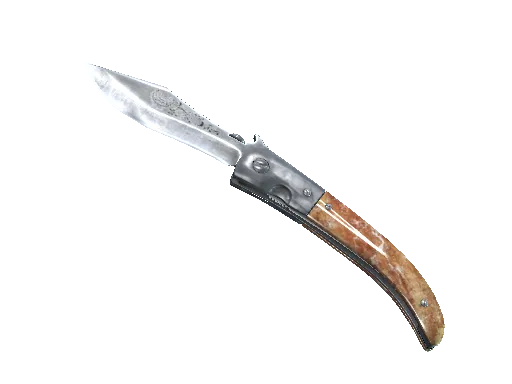 Navaja Knife
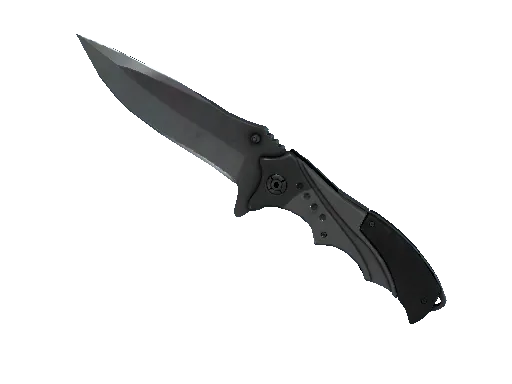 Nomad Knife
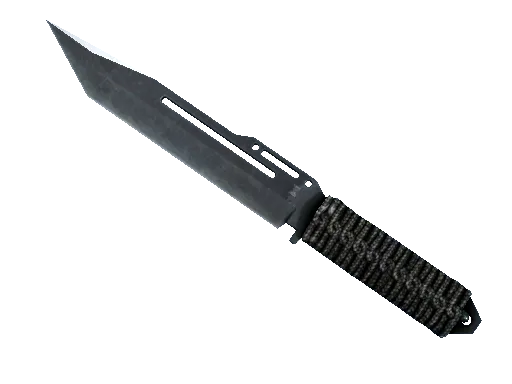 Paracord Knife
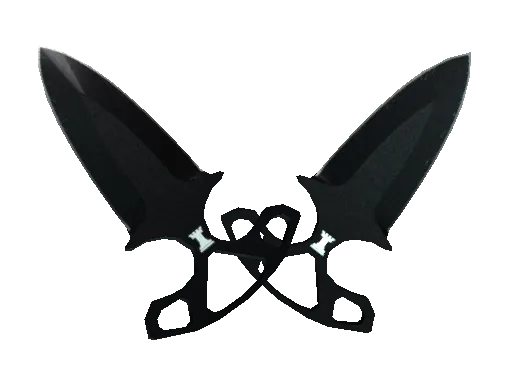 Shadow Daggers
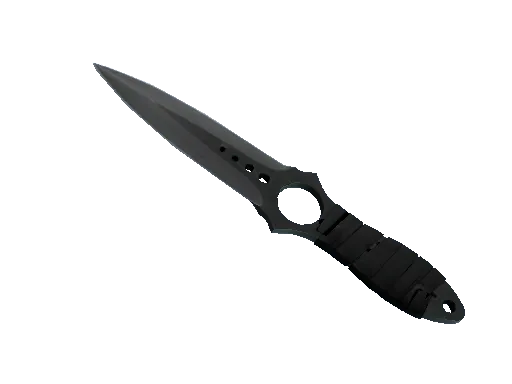 Skeleton Knife
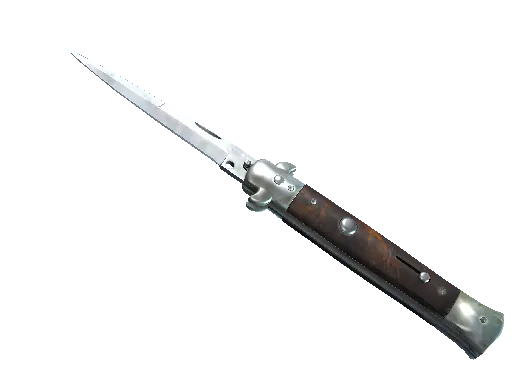 Stiletto Knife
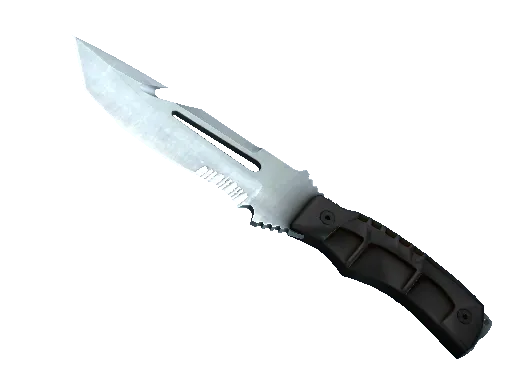 Survival Knife
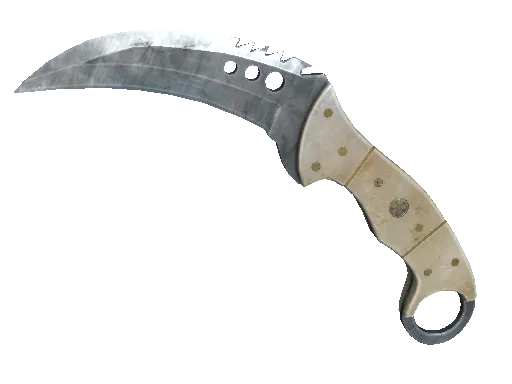 Talon Knife
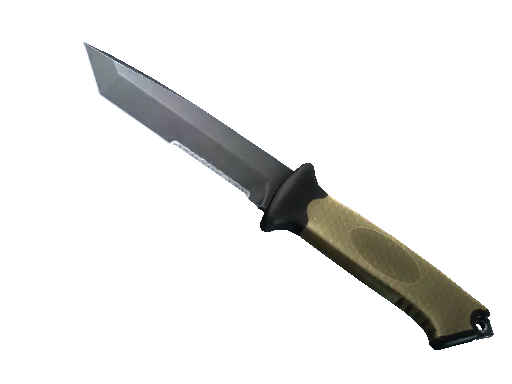 Ursus Knife
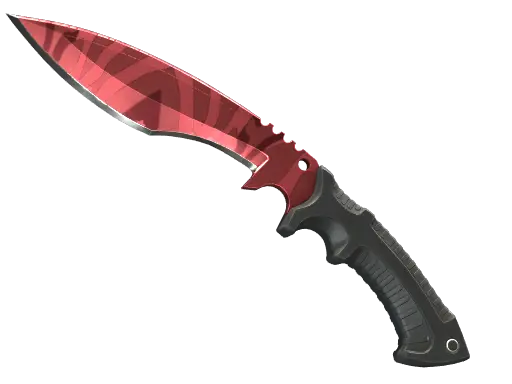 Kukri Knife
 AK-47
AK-47 AUG
AUG FAMAS
FAMAS Galil AR
 M4A1-S
 M4A4
M4A4 SG 553
 AWP
AWP G3SG1
G3SG1 SCAR-20
 SSG 08
 MAC-10
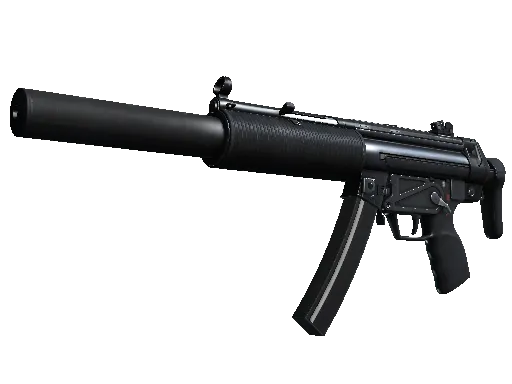 MP5-SD
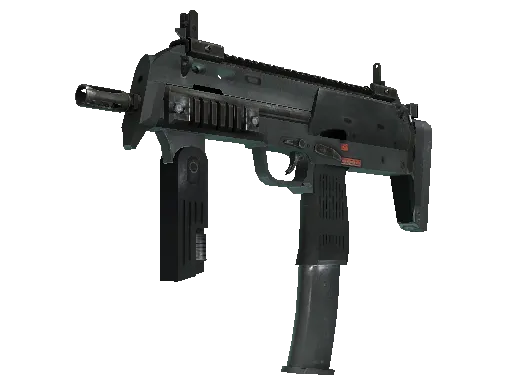 MP7
MP7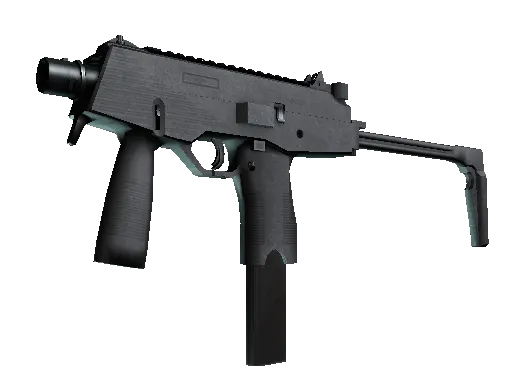 MP9
MP9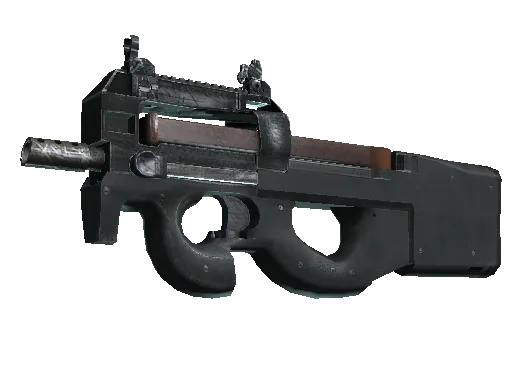 P90
P90 PP-Bizon
 UMP-45
 MAG-7
MAG-7 Nova
Nova Sawed-Off
 XM1014
Machinegun
 M249
M249 Negev
NegevGlove
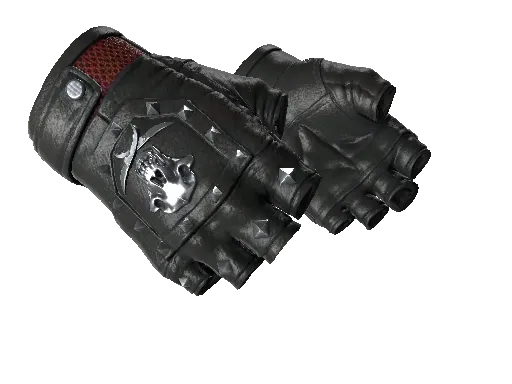 Bloodhound Gloves
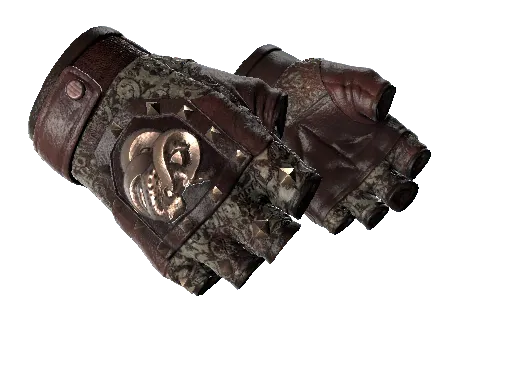 Broken Fang Gloves
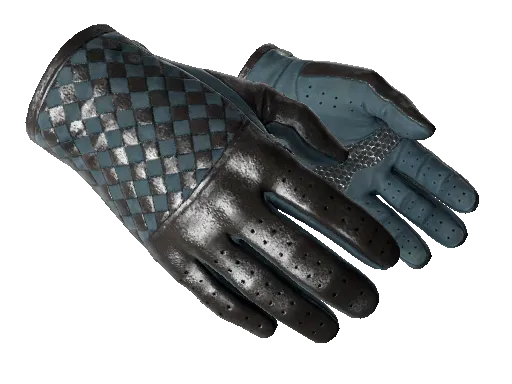 Driver Gloves
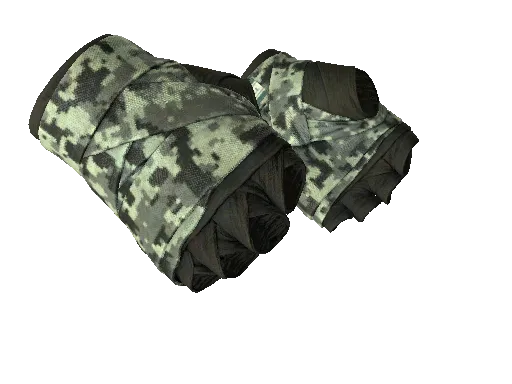 Hand Wraps
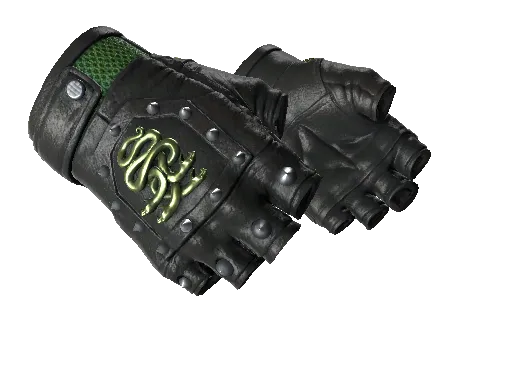 Hydra Gloves
 Moto Gloves
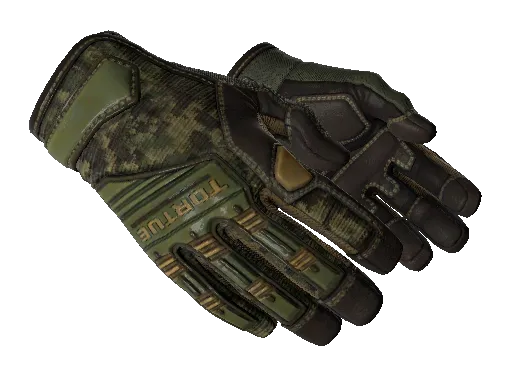 Specialist Gloves
 Sport Gloves
Categories



 17 · 18 min read · 3418 words · Published September 11, 2026 · Updated October 5, 2026
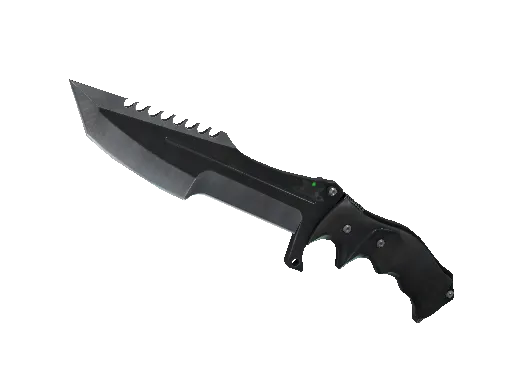
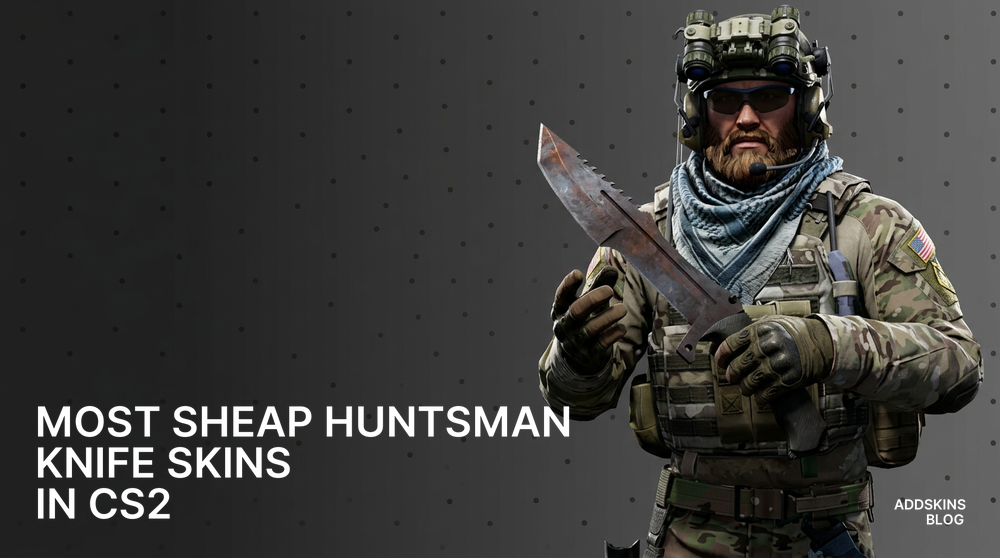
The Huntsman Knife has held a solid spot in the CS2 community for years. It's not the flashiest blade in the game, but the inspect animation is satisfying, the blade shape is aggressive and clean, and it sits at a price point that makes it accessible without feeling like a compromise. In 2026, with knife prices across the board pushing higher on the premium end, the budget Huntsman skins have become genuinely interesting - both for players who just want a knife without spending rent money, and for traders watching the lower end of the market move. This guide covers the ten cheapest Huntsman Knife finishes available right now, what separates them from each other, and which ones are actually worth buying versus which ones you should skip entirely.
The Huntsman was introduced in the Huntsman Weapon Case back in 2014, and it's been a staple ever since. The blade design - wide, clip-point style with a pronounced belly - gives it a presence in the inspect animation that a lot of thinner knives don't have. The flip animation is quick, the draw feels snappy, and the overall silhouette reads well even in low-resolution thumbnails on the Steam Market.
Community reputation-wise, the Huntsman sits in the middle ground. It's not a Karambit or a Butterfly Knife, so you won't get the same reaction in lobbies, but it's also not dismissed the way some of the cheaper knife types are. Players who run Huntsman knives tend to be practical - they want a real knife skin without the absurd premium that comes with top-tier blade shapes. The budget finishes on the Huntsman are where a lot of first-time knife buyers start, and a surprising number of veterans stick with them because the skins themselves hold up well in-game.
Every skin in this lineup is Covert rarity - that's standard for all knife skins in CS2, regardless of finish. The rarity distinction here isn't about the knife tier, it's about the finish type and how well each one ages across float values. The lineup splits roughly into three categories: plain camo/mesh finishes that rely entirely on pattern execution, solid-color or laminate finishes that show wear heavily, and the more unique finishes like Freehand and Bright Water that have actual design work behind them.
Finish quality varies more than people expect at this price range. The Rust Coat is a Patina finish - it's intentionally worn and oxidized, so it looks the same whether you're running Battle-Scarred or Field-Tested. The Black Laminate and Ultraviolet are Gunsmith finishes with layered material work that catches light differently depending on map environment. The mesh and DDPAT finishes are Mesh and DDPAT respectively - functional, clean, but not doing anything technically impressive. Freehand is hand-painted, which gives it a texture quality that stands out at close inspection range.
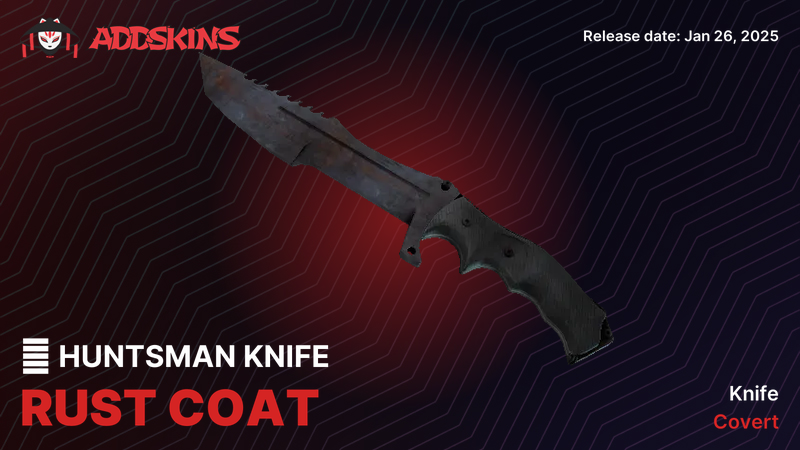
The blade and handle are covered in a heavily oxidized, rust-orange patina with dark brown and black corrosion patches throughout. The finish uses a Patina application that gives the surface a rough, uneven texture with no gloss. In-game, the orange-brown tones are visible in the inspect animation but blend into darker map environments quickly.
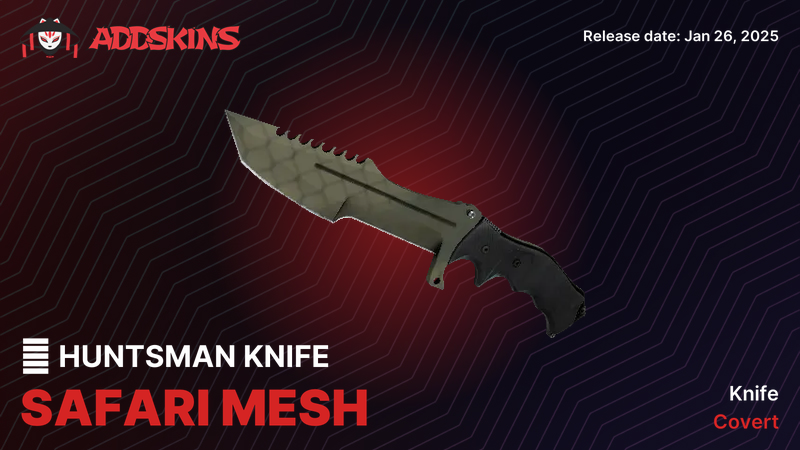
A tan and khaki mesh pattern covers the entire knife with a fine grid overlay that breaks up the surface into small diamond shapes. The finish is flat with no metallic sheen, giving it a matte military appearance. On bright maps like Dust2 or Mirage, the sandy tones read clearly during the inspect flip.
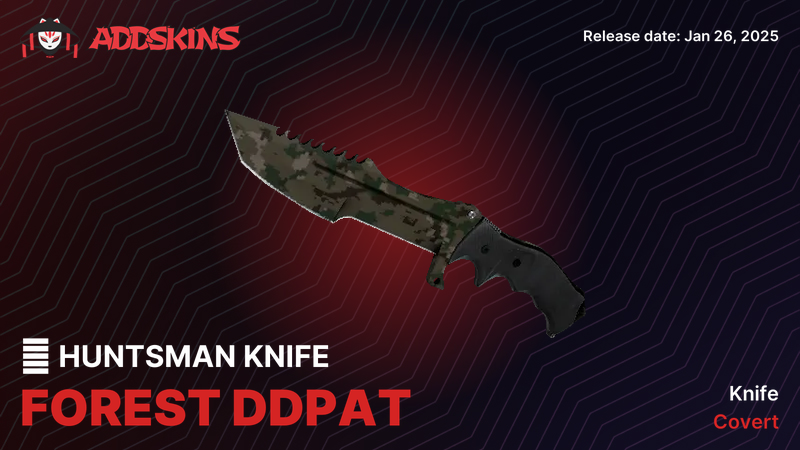
Dark green, olive, and black DDPAT camouflage pixels cover the blade and handle in a standard digital pattern. The finish is matte with minimal light reflection across the surface. The dark color palette makes it nearly invisible against foliage-heavy or shadowed map backgrounds.
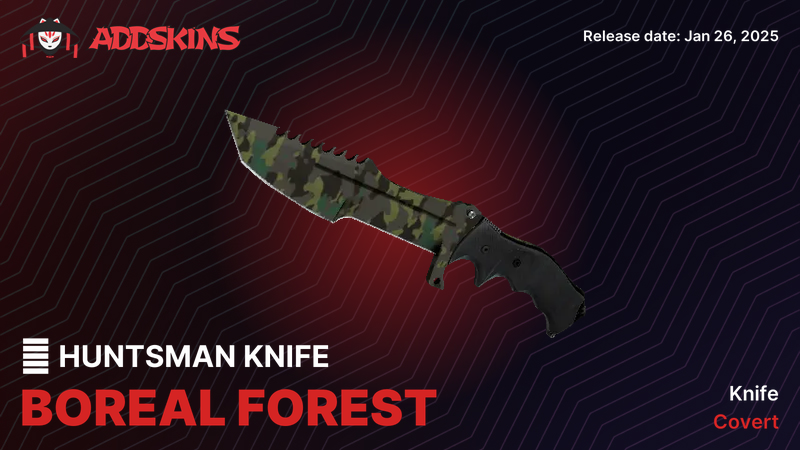
A grey, brown, and dark green woodland camouflage pattern covers the knife with soft-edged organic shapes rather than hard pixels. The finish is semi-matte with a slight texture that gives the surface some depth. On maps with natural lighting like Inferno or Ancient, the earth tones blend into the environment during movement.
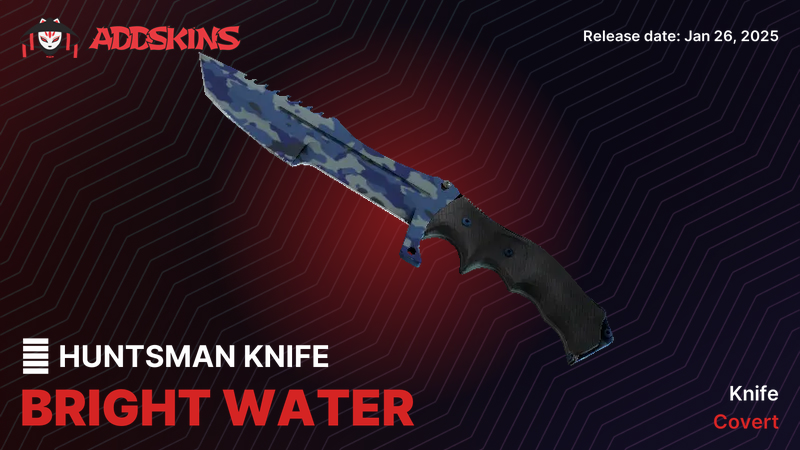
The blade features a blue-to-teal gradient with a flowing water pattern of lighter streaks and darker blue pools across the surface. The finish has a slight gloss that makes the color shift visible when the knife rotates during inspect. Under bright map lighting, the blue tones shift noticeably between teal and deep navy.
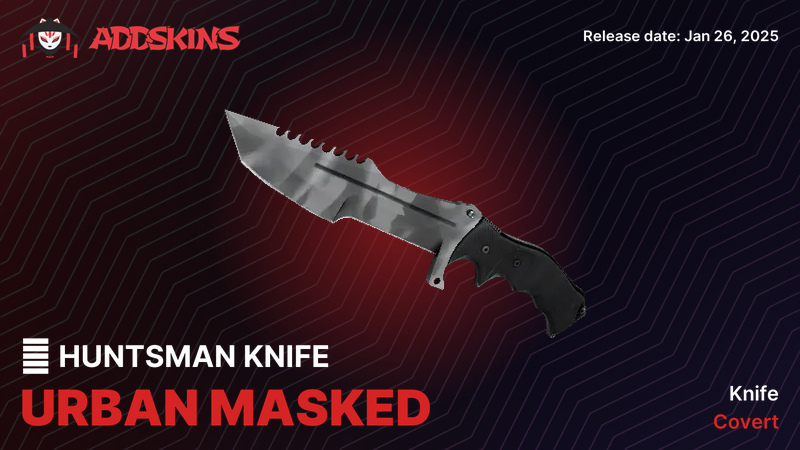
Grey, dark grey, and black urban camouflage shapes cover the blade and handle in a blocky, city-environment pattern. The finish is flat matte with no reflective quality. On concrete-heavy maps like Overpass or Nuke, the grey tones make the knife visually recede against the environment.
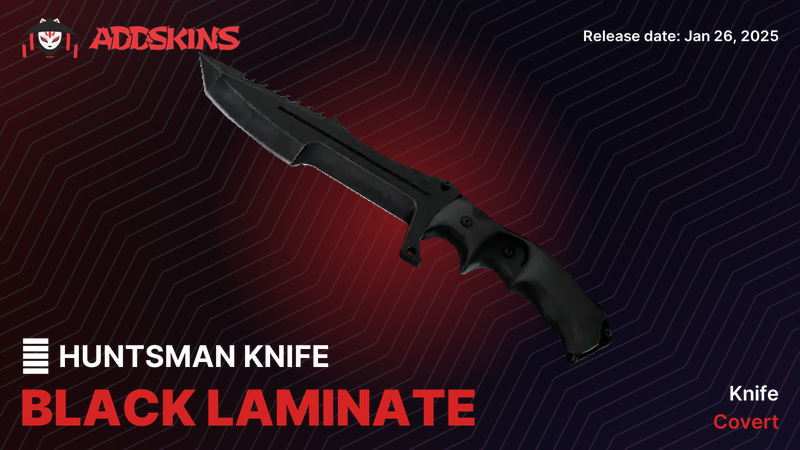
The blade is coated in a deep black with a subtle dark grey laminate texture that creates a layered, almost carbon-fiber appearance. The Gunsmith finish gives the surface a low-gloss sheen that catches directional light. In darker map areas or during the inspect animation, the layered texture becomes more visible against the black base.
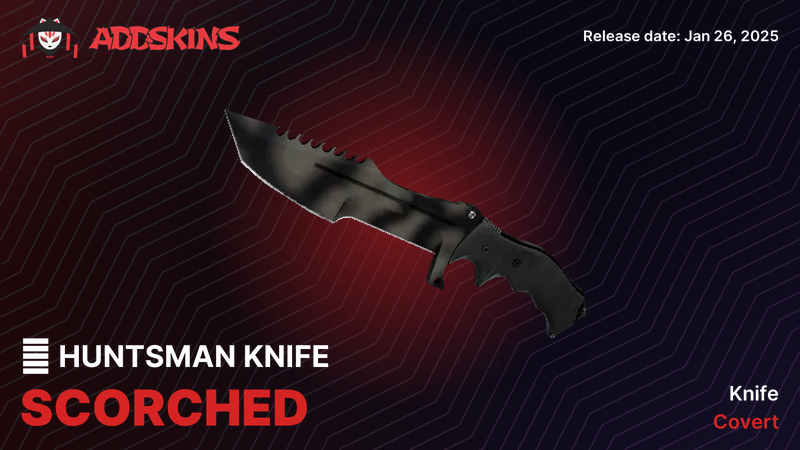
A tan and dark brown scorched pattern covers the blade with irregular burn marks and weathered patches distributed unevenly across the surface. The finish is matte with a slightly rough texture that suggests heat damage. The warm brown tones are most visible in the inspect animation under bright overhead lighting.
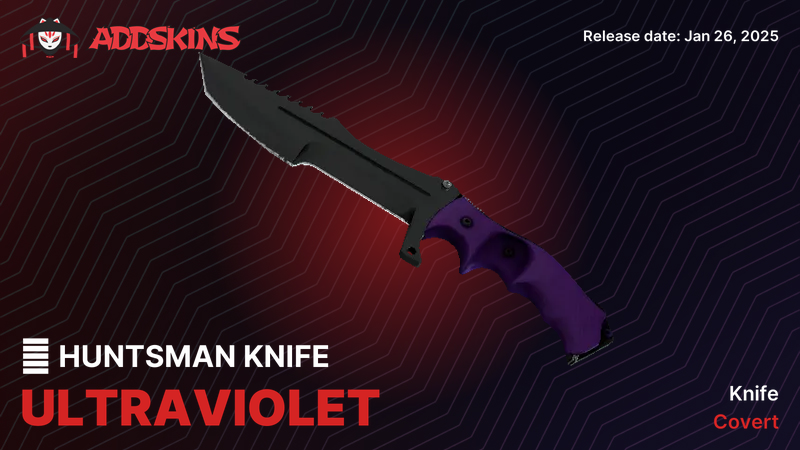
The blade is coated in a deep purple-violet with a slightly darker gradient toward the spine and edge. The Gunsmith finish gives the surface a semi-gloss quality that makes the purple shift in intensity depending on lighting angle. On maps with warm lighting like Inferno, the purple reads cooler and more saturated compared to neutral-lit environments.
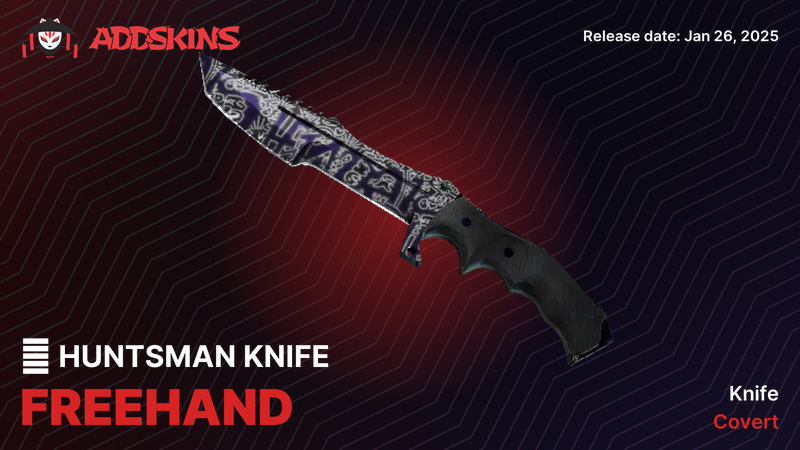
Hand-painted black linework and abstract shapes are applied over a white or cream base coat across the blade and handle. The Freehand finish gives the surface a visible brushstroke texture with varying line thickness throughout the design. During the inspect animation, the contrast between the dark linework and light base is sharp and clearly visible from any angle.
Float matters differently depending on the finish type. For the Rust Coat, float is almost irrelevant - it's a Patina finish designed to look worn, so a Battle-Scarred Rust Coat looks essentially the same as a Factory New one. Buying FN Rust Coat is one of the most common beginner mistakes on this knife.
For the Black Laminate and Ultraviolet, float makes a real difference. High-float versions of these skins develop visible scratches and wear marks on the blade that break up the clean color. A Minimal Wear or Factory New Black Laminate keeps the dark surface intact and the laminate texture readable. The Ultraviolet in FN or MW keeps the purple deep and consistent - worn versions look faded and lose the color impact entirely.
Bright Water is float-sensitive in a different way. The pattern itself doesn't change, but the gloss quality degrades with wear, which dulls the color shift that makes the skin interesting. Aim for Field-Tested or better on Bright Water if the color movement matters to you. Freehand holds up reasonably well across floats since the linework is bold enough to survive some wear, but Factory New keeps the white base cleaner.
For the mesh and DDPAT finishes - Safari Mesh, Forest DDPAT, Boreal Forest, Urban Masked, Scorched - float has minimal visual impact. These are pattern-based finishes where wear just adds some general surface scuffing without dramatically changing the look. Field-Tested is the sweet spot for price-to-condition ratio on all of them.
| Skin | Factory New | Minimal Wear | Field-Tested | Well-Worn | Battle-Scarred |
|---|---|---|---|---|---|
| Rust Coat | - | - | $85-100 | $80-95 | $78-90 |
| Safari Mesh | $120-140 | $105-120 | $95-110 | $90-105 | $88-100 |
| Forest DDPAT | $125-145 | $110-125 | $98-115 | $92-108 | $90-105 |
| Boreal Forest | $125-145 | $110-128 | $100-118 | $93-110 | $90-108 |
| Bright Water | $145-170 | $128-150 | $115-135 | $105-125 | $100-120 |
| Urban Masked | $125-145 | $110-128 | $100-118 | $92-108 | $90-105 |
| Black Laminate | $160-185 | $140-165 | $125-148 | $115-138 | $110-132 |
| Scorched | $120-140 | $105-122 | $95-112 | $90-106 | $88-102 |
| Ultraviolet | $165-195 | $145-170 | $130-155 | $118-142 | $112-135 |
| Freehand | $155-180 | $135-158 | $120-142 | $110-132 | $105-128 |
StatTrak versions carry a consistent premium of roughly 15-25% across all float ranges. The Rust Coat StatTrak is particularly interesting because the float premium disappears - all wear levels cost nearly the same, so StatTrak FT or BS Rust Coat is where value buyers look.
The entry-level Huntsman skins serve different audiences depending on the specific finish. The mesh and DDPAT options - Safari Mesh, Forest DDPAT, Boreal Forest, Urban Masked, Scorched - are genuinely good first knife purchases. They're cheap enough that a player can get into knife ownership without a major financial commitment, and the Huntsman's inspect animation makes even the plainest finish feel like a proper upgrade over a stock knife.
Traders and investors are more interested in the Ultraviolet, Black Laminate, and Freehand. These three have more distinct visual identities and tend to hold value better during market dips because they appeal to players who actually want to use them, not just flip them. The Bright Water sits in the middle - it's visually interesting enough to attract buyers, but the market for it is thinner than the darker finishes.
Collectors running a full Huntsman set will obviously want all ten, but for anyone building a loadout, the practical advice is to pick based on your existing gloves and weapon skins. If you're running dark gloves and dark rifles, the Ultraviolet or Black Laminate adds contrast. If your loadout is already busy with color, the Rust Coat or Scorched keeps things grounded. Speaking of gloves - if you're putting together a loadout around one of the darker Huntsman finishes, checking aggregated prices on ★ Specialist Gloves is a good starting point since several colorways pair cleanly with the black and purple tones in this lineup.
| Pros | Cons |
|---|---|
| Lowest entry price for a Huntsman knife in CS2 | No prestige factor compared to premium Huntsman finishes |
| Huntsman inspect animation works well with all finishes | Mesh and DDPAT finishes look similar to each other in-game |
| Rust Coat is float-irrelevant - buy any condition cheaply | Ultraviolet and Black Laminate need low float to look their best |
| StatTrak available on all skins in the lineup | StatTrak premium adds significant cost on the better finishes |
| Freehand and Bright Water have genuine visual appeal | Limited investment upside compared to rarer Huntsman skins |
| Good liquidity - easy to sell when upgrading | Market is crowded at this price tier, harder to sell at a premium |
The darker finishes in this lineup - Black Laminate, Ultraviolet, Urban Masked - pair well with gloves that have dark or neutral colorways. The Ultraviolet in particular works well alongside purple-tinted or dark leather gloves. For players running a full dark loadout, the Black Laminate Huntsman with dark rifle skins creates a cohesive look that reads well in the hands view during actual play.
Bright Water is the outlier here - the blue tones pair better with lighter gloves or those with blue accents. It's one of the few budget Huntsman skins that actually works with a brighter loadout without looking out of place. The Freehand's black-and-white design is arguably the most loadout-neutral skin in the group - it doesn't clash with much.
Map lighting makes a real difference for the color-dependent skins. The Ultraviolet looks best on maps with neutral or cool lighting - Nuke, Vertigo, and Ancient all show the purple well. Inferno's warm orange lighting washes out the purple slightly and makes it read more brown. The Bright Water benefits from any map with overhead lighting that catches the gloss finish - Mirage and Dust2 both work well. For players who want to compare glove options that complement these finishes, the aggregated listings for ★ Hydra Gloves cover several colorways that work alongside the green and earth-tone Huntsman finishes in this lineup.
Tip: For Rust Coat, always buy the cheapest condition available regardless of float. The Patina finish makes float visually irrelevant, and the price difference between FN and BS is minimal - but buying BS saves you real money over time if you're stacking multiple purchases.
Important: Check the specific float value before buying Ultraviolet or Black Laminate. A Field-Tested at 0.15 float looks dramatically better than one at 0.37. The condition label alone doesn't tell you enough - always look at the actual float number on the listing.
Beginner mistake: Buying Factory New Safari Mesh or Forest DDPAT when Field-Tested looks identical in-game. The price difference is real but the visual difference is negligible on mesh and DDPAT finishes. Save the money and put it toward a better float on a finish where it actually matters.
Tip: StatTrak Rust Coat is one of the few StatTrak knives where the float premium disappears entirely. If StatTrak matters to you, this is where to get it cheapest on a Huntsman.
Important: The Freehand has pattern variation that affects how the linework is distributed across the blade. Some patterns have denser linework on the spine, others concentrate it near the edge. Check screenshots of the specific listing before buying if the pattern placement matters to you.
The honest answer is that budget Huntsman skins are not strong investment vehicles. The floor on knife prices in CS2 has been relatively stable, but the ceiling on these specific finishes is capped by the existence of more desirable Huntsman skins at higher price points. Players upgrading their knife will move past these finishes, not hold them.
That said, the Ultraviolet and Black Laminate have shown consistent slow appreciation over the past two years. They're not going to double in value, but they're also not going to crater. If you're buying one to use and plan to sell it eventually, these two are the safest choices in the lineup for retaining value. The Rust Coat is the opposite - it's cheap because it's perceived as low-status, and that perception hasn't shifted despite the skin actually looking decent in-game.
The Freehand is the wildcard. Hand-painted finishes have a niche following in CS2, and the Huntsman Freehand occasionally spikes in interest when content creators feature it. It's not a reliable investment, but it's not a bad hold either. Anyone seriously thinking about knife investment should be looking at higher-tier Huntsman finishes rather than this budget tier - but within this tier, Ultraviolet and Freehand are the ones with the most realistic upside.
If the budget Huntsman lineup is still too expensive, the Navaja Knife and Nomad Knife have comparable entry-level finishes at lower price points. The Navaja Knife | Safari Mesh and Navaja Knife | Forest DDPAT run significantly cheaper than their Huntsman counterparts and use identical finish templates. The tradeoff is the inspect animation, which most players consider inferior to the Huntsman.
Stepping up from the budget Huntsman tier, the next logical targets are the Huntsman Knife | Stained, Huntsman Knife | Case Hardened, and Huntsman Knife | Fade. The Stained is the cheapest step up and offers a noticeably more premium look than anything in the budget lineup. The Case Hardened opens up pattern investment territory - specific blue-heavy patterns command serious premiums. The Fade is the top-tier Huntsman finish for most players, with full-fade versions being among the most visually striking knives at any price point.
For players who want a more prestigious blade shape at a similar budget, the ★ Stiletto Knife in entry-level finishes sits in a comparable price range and carries more lobby presence than a budget Huntsman. The tradeoff is that the Stiletto's inspect animation, while good, doesn't have the same satisfying weight as the Huntsman flip.
The budget Huntsman Knife lineup covers a wider range of actual quality than the price tags suggest. The Rust Coat, Safari Mesh, and Forest DDPAT are honest entry-level purchases for players who want a knife without overthinking it, while the Ultraviolet, Black Laminate, and Freehand are genuinely good skins that happen to sit at the cheaper end of the Huntsman price ladder. Float discipline matters more on some of these than others - particularly on the Gunsmith finishes - and getting that right is the difference between a purchase that looks great for years and one that disappoints in the first week. For players building out a full loadout around one of these knives, comparing glove options through aggregated price listings on ★ Specialist Gloves is worth the time before committing to a specific finish direction.
Battle-Scarred is the right call for Rust Coat. The Patina finish is designed to look heavily worn regardless of float, so there is no visible difference between FN and BS in-game. The price gap between conditions is small but real - always buy the cheapest condition available on Rust Coat.
Yes, noticeably. Inferno's warm orange ambient lighting pulls the purple toward a brownish-violet tone that looks less saturated. Nuke and Vertigo have cooler neutral lighting that keeps the purple deep and accurate. If you play a lot of Inferno, the Ultraviolet is less impressive than it looks in screenshots taken on other maps.
Black Laminate holds better at FT. The dark base coat means wear marks are less visible and the laminate texture stays readable. Freehand's white base picks up visible scuffing at higher floats that breaks up the linework. If you're buying FT specifically, Black Laminate is the safer choice.
Gloves with dark leather or blue-grey tones work best. Specialist Gloves in Crimson Kimono or Vice are popular pairings because the dark base contrasts the blue without competing with it. Avoid gloves with heavy orange or yellow elements - they clash with the teal and navy in Bright Water.
Safari Mesh is the better starting point. It has slightly higher liquidity on the market, making it easier to sell when upgrading. Boreal Forest has a similar price but a thinner buyer pool, which can make reselling slower. Both look comparable in-game, but Safari Mesh is the more practical choice for someone planning to flip it later.



 0 ·
0 ·